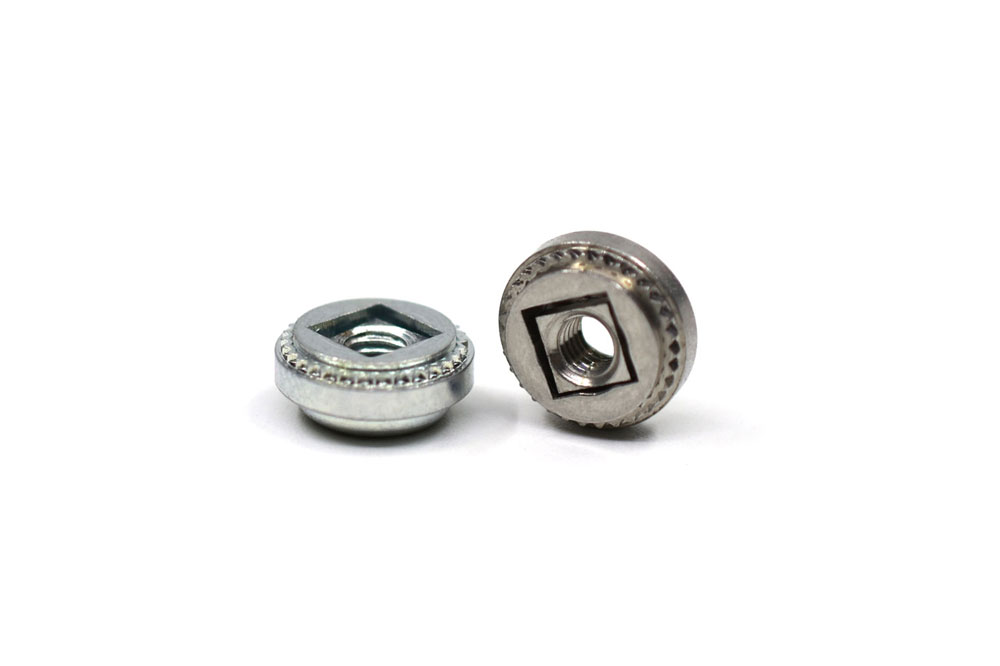
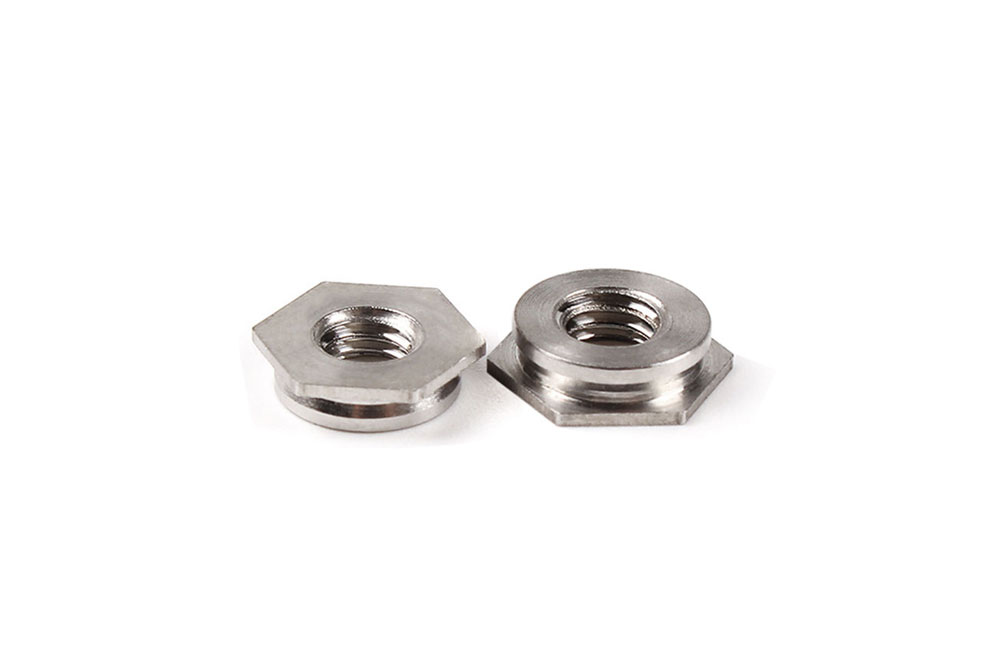
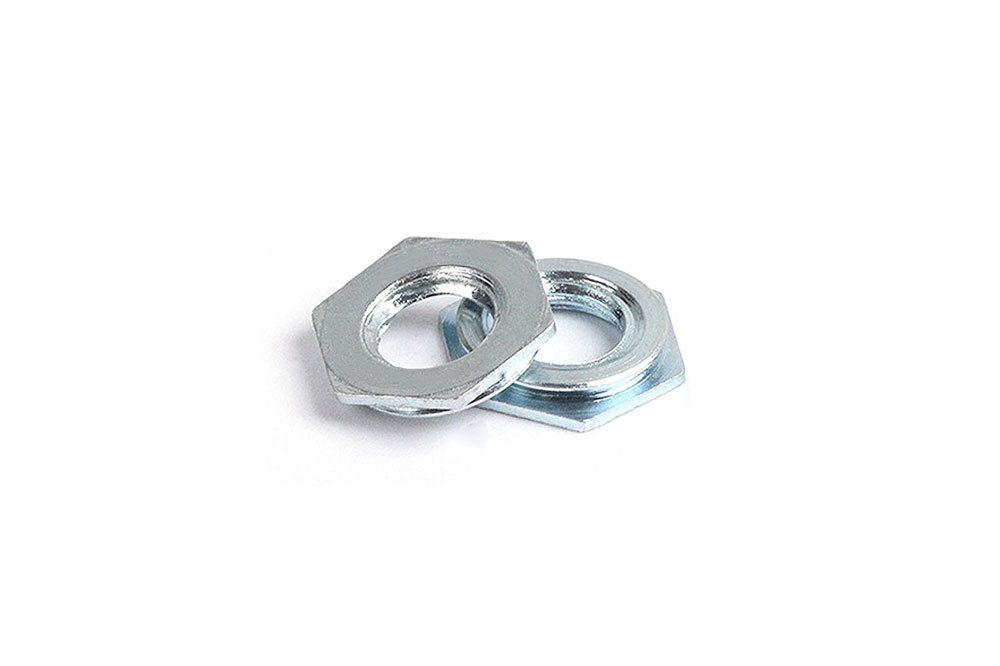
Self clinching nuts are generally round in shape, with knurled teeth and guide grooves on one end. They are particularly suitable for joining thin plates or sheet metal, keeping the back of the sheet flat, which are suitable for products with high aesthetic requirements.
The fastening is achieved through the friction between the knurled teeth and the sheet metal. The locking force is evenly distributed across all threads, forming strong anti-loosening and vibration-resistant capabilities. They can maintain a stable connection even under high torque, making them suitable for high-intensity vibration environments.
The installation process is simple. Pressure is applied using a pressing tool to embed the knurled teeth into the sheet metal. It is fast and efficient, requiring no additional bolts or nuts. They are also reusable, and the locking force does not decrease after multiple tightening and loosening, saving costs.
Common sizes range from M2 to M12 (Unified sizes are #2-#12). Common materials include carbon steel, stainless steel and aluminum alloy. Stainless steel self clinching nuts have strong corrosion resistance and are suitable for humid or corrosive environments. Carbon steel self clinching nuts are low in cost and have good mechanical properties, but require rust prevention treatment.
The size and material can be selected according to different application scenarios.