
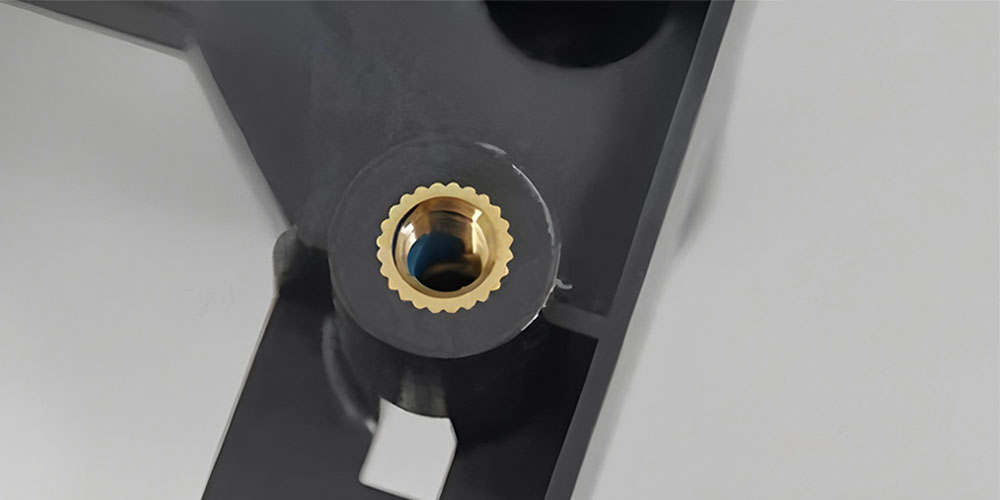
It is very common for brass insert nut to be embedded in PC plastic. Polycarbonate (PC) plastic is a non-crystalline thermoplastic. Engineers call it bulletproof plastic due to its high impact resistance. However, three key issues exist: poor melt flow, stress concentration risks, and low shrinkage during molding.
During injection molding, embedding insert nuts into PC material creates internal stress at the metal-plastic interface as the part cools. Early cracks form but remain hidden due to shallow depth. Within 3-7 days, material stabilization combines with temperature changes. This gradual stress release causes visible cracks to develop over time. The delayed failure mechanism poses quality control challenges since initial inspections often miss these micro-defects.
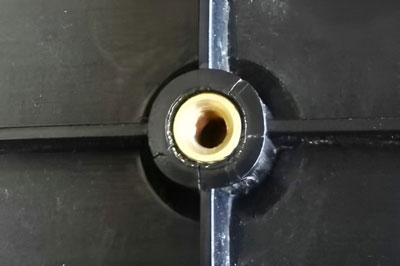
Why does PC plastic crack after being inserted into a brass nut?
The core cause lies in the absence of preheating for metal insert nuts. Unheated metal combines with molten plastic at high temperatures. Two expansion coefficient differences emerge: First, cooling rates mismatch. Second, material thermal expansion coefficients differ significantly.
Testing confirms technicians can observe physical cracks at metal-plastic interfaces through high-magnification optical microscopes. Ultrasonic vibration activates hidden stress cracks. Technicians identify material gaps using optical microscopes. Ultrasonic testing reveals concealed structural weaknesses.
Solutions for cracking after insert nut implantation
Conventional Methods to Try First
First, preheat the metal insert nut. When the melting temperature of PC plastic is between 230-300℃, it is recommended to heat the metal insert to around 200℃ before operation.
Secondly, the metal insert must be made of copper, because copper has better thermal conductivity than other metals.
However, please note: These two methods are only suitable for plastic parts with low PC content. If it is high PC content or pure PC material, these methods will not work.
Alternative Solutions for Special Circumstances
Try these three alternative solutions:
Solution 1: Punch Press Method
After the plastic part has completely cooled and set, leave a cylindrical through-hole (no bevel required) in the predetermined position. Use a punch press to apply vertical pressure and directly press and fix the insert nut.
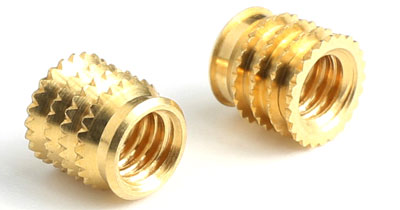
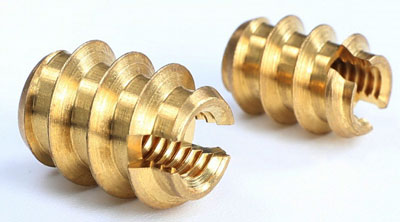
Solution 2: Self-Tapping Thread Insertion
Make the brass nuts with an external thread with a 15-degree taper angle, and screw it directly into the pre-reserved plastic hole using a power tool. The principle is similar to installing a threaded insert.
Solution 3: Tempering Process
Heat the quenched metal insert below critical temperature. Maintain the set temperature. Cool in air, water, or oil medium. Adjust tempering temperature to control material properties. Lower temperatures raise hardness. Higher temperatures boost toughness. Tempering primarily aims to relieve internal stress. This process enhances material ductility effectively.
Taking PA with 30% glass fiber content as an example:
Tempering temperature: 100~120 degrees Celsius
Holding time: 30-120 minutes
Cooling method: air cooling, natural cooling
Tempering treatment significantly reduces internal stress in workpieces. This theoretically prevents cracking issues. Actual engineering performance requires systematic validation. We optimize process parameters continuously using verification data.
For any issues encountered after implanting plastic inserts, please feel free to contact our engineers info@thank-tech.com for solutions or visit our website www.thank-tech.com for more technical support.